Every Flagstaff group trip to Phoenix Sky Harbor eventually runs into the same math problem. The airport sits 146 miles south on I-17 — and that highway drops nearly 6,000 feet from pine country to desert, with 6–7% grades through the Black Canyon City corridor and a real-world run-time that swings from two and a half hours to well past three depending on grade traffic, conditions near Munds Park, and whether the ongoing Sunset Point–to–Flagstaff paving work is closing a lane that morning. When your group is counting on a specific flight window, four cars in a caravan on I-17 means four chances for someone to fall behind, four separate parking decisions at one of the busiest airports in the country, and — on the return — four tired travelers climbing out of the terminal and trying to remember where they parked.
One bus from Flagstaff eliminates every one of those variables. Partybusflagstaff.com makes it easy to compare vehicles and online rates for the PHX run — fill out the form or call 928-707-8906 and pricing comes back in under 30 seconds, no account required.
Phoenix Sky Harbor International Airport (3400 E Sky Harbor Blvd, Phoenix, AZ 85034; (602) 273-3300) is Arizona's primary international hub and, for Flagstaff groups, the only practical gateway to most major carriers. PHX operates two active terminals: Terminal 3, the John S. McCain III Terminal, which handles Delta, Alaska Airlines, JetBlue, Spirit, Frontier, United, and Hawaiian; and Terminal 4, the Barry M. Goldwater Terminal, which serves American Airlines, Southwest, and all international carriers including Air Canada, British Airways, Volaris, and WestJet. The two terminals sit at opposite ends of the airport's road system and are not accessible to each other without the PHX Sky Train — a detail that shapes the entire curbside pickup plan for any group arriving or departing on a charter bus.
The I-17 Reality: Distance, Grades, and Drive-Time Buffers for the PHX Charter Bus Run
The Flagstaff-to-PHX drive is 146 miles via I-17 South, and a passenger car on a clear weekday completes it in roughly two hours and thirty minutes. That estimate is real — and also incomplete. I-17 is one of the steepest Interstate corridors in the country: per the Interstate 17 route article, the highway climbs more than 5,800 feet between Phoenix at 1,117 feet and Flagstaff at 7,000 feet.
Southbound, that descent is not a 70-mph cruise. The Black Canyon City grade section (approximately mileposts 244–251 southbound) features runaway-truck ramps for a reason — the sustained 6–7% grade demands extended engine braking on a heavy commercial vehicle, and real-world speed through those sections is meaningfully slower than a sedan's. Add the Verde Valley grade near Camp Verde, and a Flagstaff group should plan on 3 hours minimum for a loaded charter bus, with 3.5 hours the realistic buffer for any flight where a tight connection is at stake.
A road-map estimate is useful; a commercial vehicle's grade pace on I-17 South is what you actually depart by.
The I-17 Improvement Project completed 23 miles of new lanes between Anthem Way and Black Canyon City — a third lane in each direction through one of the corridor's historically worst bottlenecks — and added a flex-lane system from Black Canyon City to Sunset Point, both open as of mid-2025. Capacity relief on the section that used to back up worst on holiday weekends is genuine. Separately, the Sunset Point–to–Flagstaff paving project is expected to continue through fall 2026, with potential lane restrictions on the northernmost stretch of the run.
Southbound Flagstaff-to-PHX runs may see brief slowdowns through active work zones in that segment. Before any departure, check az511.gov — Arizona's official ADOT real-time traveler information platform — for current milepost-level lane restrictions, advisory speeds, and closure notices along I-17.
Winter adds an entirely separate layer. Flagstaff averages more than 100 inches of snow annually, and I-17 can see chain requirements and intermittent closures from the Munds Park area north to Flagstaff even when Phoenix is sitting at 65°F and sunny. The elevation difference between the two cities is not a scenic footnote — it is a practical timing variable.
For winter departures, build an additional 30 to 60 minutes beyond the table below, and run the az511.gov map check the night before and again the morning of departure.
Charter Bus and Party Bus Drop-Off at Phoenix Sky Harbor Terminals
PHX operates two terminals on entirely separate roadway loops, so confirming your airline's terminal assignment before the bus leaves Flagstaff is the first logistics job — not a detail to sort out somewhere around Black Canyon City. Each terminal has its own arrivals curb at Level 1 (ground level, below departures), with designated commercial and prearranged zones that keep charter buses and permitted ground transportation separate from rideshare and taxi lanes. You can find terminal assignments by carrier on the PHX Wikivoyage guide or in your airline's app before you depart Flagstaff.
Terminal 4, Barry M. Goldwater Terminal: American, Southwest, and All International Arrivals
Terminal 4 is PHX's largest terminal — 92 gates across eight concourses — and the one most Flagstaff groups flying American or Southwest will use. It also handles all international arrivals, so multi-airline groups often converge here. Commercial and prearranged vehicles use the designated outer-curb zones at Level 1; the center island prearranged pickup area is where scheduled intercity services stage, with Door 5 being the commonly cited reference point for prearranged operators including the Groome Transportation scheduled shuttle.
Rideshare (Uber, Lyft, Waymo) operates on the north outer curb near Door 1 and the south outer curb — in separately marked zones from the commercial area. Because Terminal 4 has a significant east-west spread across its three levels, build five to ten extra minutes after baggage claim for your group to reach the Level 1 curb from the farthest concourses before calling to release the bus from the hold lot.
Terminal 3, John S. McCain III Terminal: Delta, Alaska, JetBlue, and Others
Terminal 3 handles Delta, Alaska Airlines, JetBlue, Spirit, Frontier, United, and Hawaiian Airlines across its 27 gates — making it the terminal for most Flagstaff groups not flying American or Southwest. Its footprint is more compact than Terminal 4, and the Level 1 arrivals curb follows the same zone logic: rideshare on the south outer curb, prearranged and commercial vehicles in the designated outer-curb prearranged zone, with Door 9 as the commonly referenced pickup landmark for scheduled intercity services at Terminal 3. The terminals are not within walking distance of each other.
If anyone in your group has a connection requiring a terminal change, the PHX Sky Train handles the landside transfer — but airside (through security) connections between terminals require separate TSA re-screening.
How PHX's 44th Street Hold Lot and Staging Process Work for Charter Groups
PHX uses a holding lot system to keep commercial vehicles off the active terminal curbs until a group is assembled and ready. The 44th Street Transportation Hold Lot, at 44th Street and Washington Street, is the designated staging area for permitted ground transportation serving the terminals. A charter bus from Flagstaff does not idle at the Level 1 arrivals curb while your group works through baggage claim — PHX's curb is an actively managed commercial zone.
The sequence the airport's system requires is fixed:
Step one: gather the group. Every person in your party needs to have their bags and be assembled at the agreed terminal's curbside pickup zone before any call goes out to move the bus. Calling while half the group is still at the carousel wastes curb time and can force a second circuit.
Step two: one coordinator calls. A single point of contact confirms the group is ready and at the correct terminal's commercial curb zone. Step three: the bus arrives.
The vehicle moves from the staging area to the curb, typically within about 10 to 15 minutes. Gather first. Call second.
Never the other way around.
For departure drop-offs — a Flagstaff group arriving at PHX for an outbound flight — the bus uses the upper departures level roadway at whichever terminal your airline operates. The bus pulls to the curb near the check-in area, the group unloads bags, and the bus clears the curb quickly. No parking structure entry is needed.
Drop-off at PHX for departures is generally the simpler half of the trip because you control the departure time from Flagstaff rather than waiting on a flight schedule.
The airport's own curb rules make the sequence non-negotiable. A 56-passenger charter bus cannot stage indefinitely at the Level 1 arrivals curb. Gather every bag and every person at the designated commercial zone first — then call.
One group coordinator with one clear signal is the difference between a smooth handoff and a second loop around the terminal road.
PHX Ground Transportation Permit Categories and What They Mean for a Flagstaff Charter Bus
Every commercial vehicle picking up or dropping off passengers at Phoenix Sky Harbor must hold a current PHX ground transportation permit and display a valid decal on the lower passenger side corner of the windshield — no decal means no authorization to operate on airport property. PHX structures its permitted operators into three categories: On-demand (taxis and walk-up for-hire services under city contracts), Courtesy (hotel and off-airport parking shuttles), and Prearranged/Intercity. A charter bus operating the Flagstaff-to-PHX run falls squarely under the Prearranged/Intercity category — "intercity" applies to any service originating beyond a 35-mile radius of the airport, and Flagstaff is roughly 130 miles out.
The permit category determines which curb zone a vehicle is authorized to use, which is why it matters for your group's actual pickup plan, not just the operator's paperwork.
The practical implication for your group: the Prearranged/Intercity category is open to any qualifying company — it is not limited to a single approved operator or franchise. That is why Partybusflagstaff.com's network can surface options from bus companies that already hold the right PHX permit for an intercity Flagstaff run. You are not locked into one fleet or one scheduling window.
The full permit and commercial ID credential requirements are managed by PHX's Ground Transportation Office; official reference lives at skyharbor.com.
The PHX Sky Train and What It Means for Your Group
The PHX Sky Train is the airport's free automated people-mover, running 24 hours a day at no cost, every 3 to 5 minutes, with six stations across the complex. Per the PHX Sky Train Wikipedia entry, the system opened in April 2013 and reached its final configuration in December 2022 when the Rental Car Center extension completed. The six stations are: Terminal 3, Terminal 4, East Economy Parking, 24th Street Economy Parking, the Rental Car Center, and the 44th Street/Washington station — where it connects to Valley Metro's A Line light rail for travel into downtown Phoenix and beyond.
For a Flagstaff charter bus group, the Sky Train's most useful role is landside navigation inside the complex. If members of your group are using economy parking, picking up a rental car, or need to transfer between terminals without going airside, the Sky Train handles it for free, day and night. What it does not do is connect the two terminals on the airside (secure) level — passengers making connections between Terminal 3 and Terminal 4 on the airside need to go through security twice.
For most Flagstaff groups arriving or departing as a unit on one bus, the Sky Train runs in the background: your group's bus meets you at the designated curb zone, and the transit infrastructure takes care of anyone who needs to navigate the complex independently.
Transportation Options from Flagstaff to PHX Compared
A private charter bus is not the automatic answer for every group. Here is an honest look at the options Flagstaff travelers actually use for the PHX run:
| Option | Cost shape | Arrive together? | PHX drop-off | Best group size |
|---|---|---|---|---|
| Charter bus or minibus | One flat rate, split across the group | Yes — one vehicle, one departure, one coordinator call at PHX | Upper departures curb (outbound) or Level 1 prearranged zone (inbound) | 15–56 |
| Groome Transportation (shared shuttle) | ~$65+ per person one-way; 13 daily runs | Only if everyone books the same run | Door 5 (T4) or Door 9 (T3) center island | Any, but set schedule, no group control |
| Rental cars, multiple vehicles | Per car + gas + PHX parking ($12–$33/day depending on lot) | No — caravans split on I-17, separate arrival windows | Terminal departures drive-up; park in economy or garage | 1–4 per car |
| Rideshare (Uber/Lyft) | Per car each way, surge risk on busy travel days | No — multiple ETAs, different vehicles | Designated rideshare zone, Level 1 | 1–4 per car |
For one or two people, the Groome shuttle — which runs 13 daily round trips from Flagstaff and stops at NAU and Camp Verde — is often the right call. Groome's Phoenix Airport page has the current Flagstaff schedule and booking info. The math tips toward a private charter bus once your group reaches 10 or more, and it tips decisively past 15: at that size, the per-person cost of a single vehicle on a flat day-rate is often lower than multiple rideshares or the coordination cost of a caravan on a 146-mile mountain highway.
Nobody is managing a car in the Black Canyon City grade section when they could be in a seat.
The per-person math. A 30-passenger minibus might run $1,100–$2,150 for the day; split across 25 passengers, that's roughly $44–$86 per person for the full round trip. At $65+ each way on the Groome shuttle, a group of 25 pays $3,250+ each way.
PHX economy parking for 6 cars at $16/day for 7 nights runs nearly $700 before anyone accounts for gas on the I-17 grade. One bus, one number, one coordination point.
Rent a Bus from Flagstaff to PHX: Vehicle Options for Every Group Size
The 146-mile I-17 run suits every vehicle in Partybusflagstaff.com's network, and the right choice comes down to headcount and luggage. PHX trips almost always mean full-size rolling bags — unlike a short city run where carry-ons dominate — so undercarriage storage capacity matters more here than for most charters.
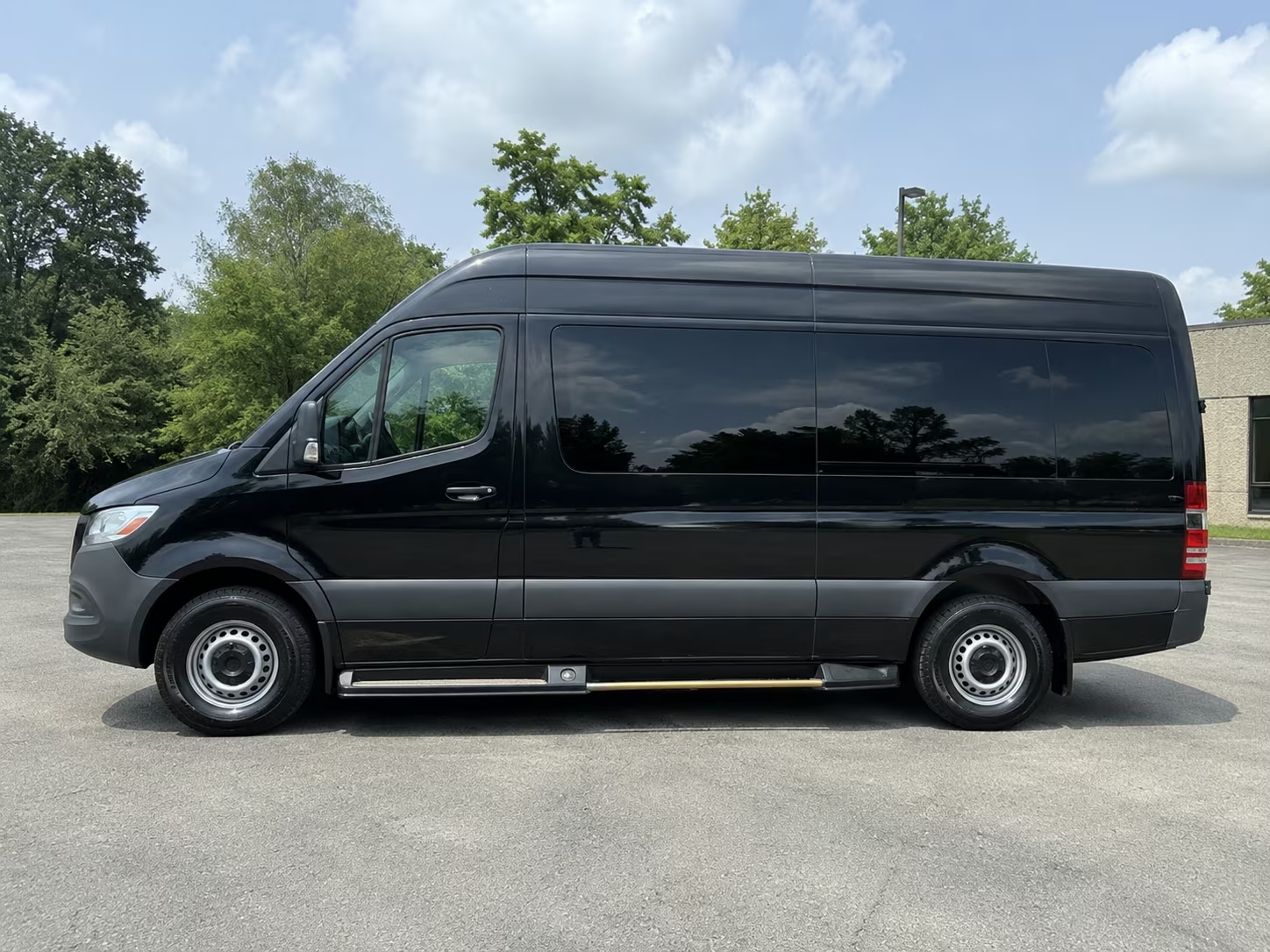
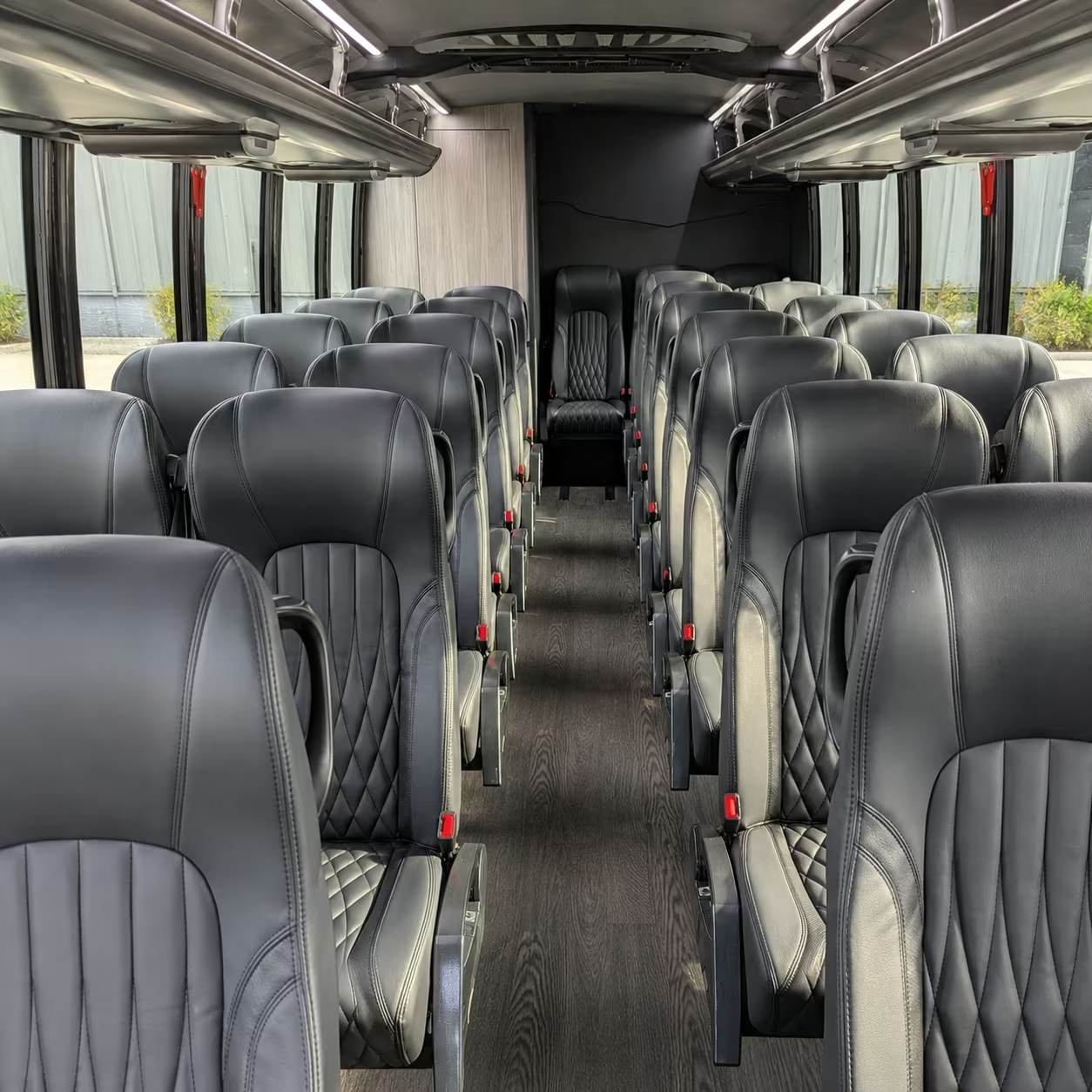
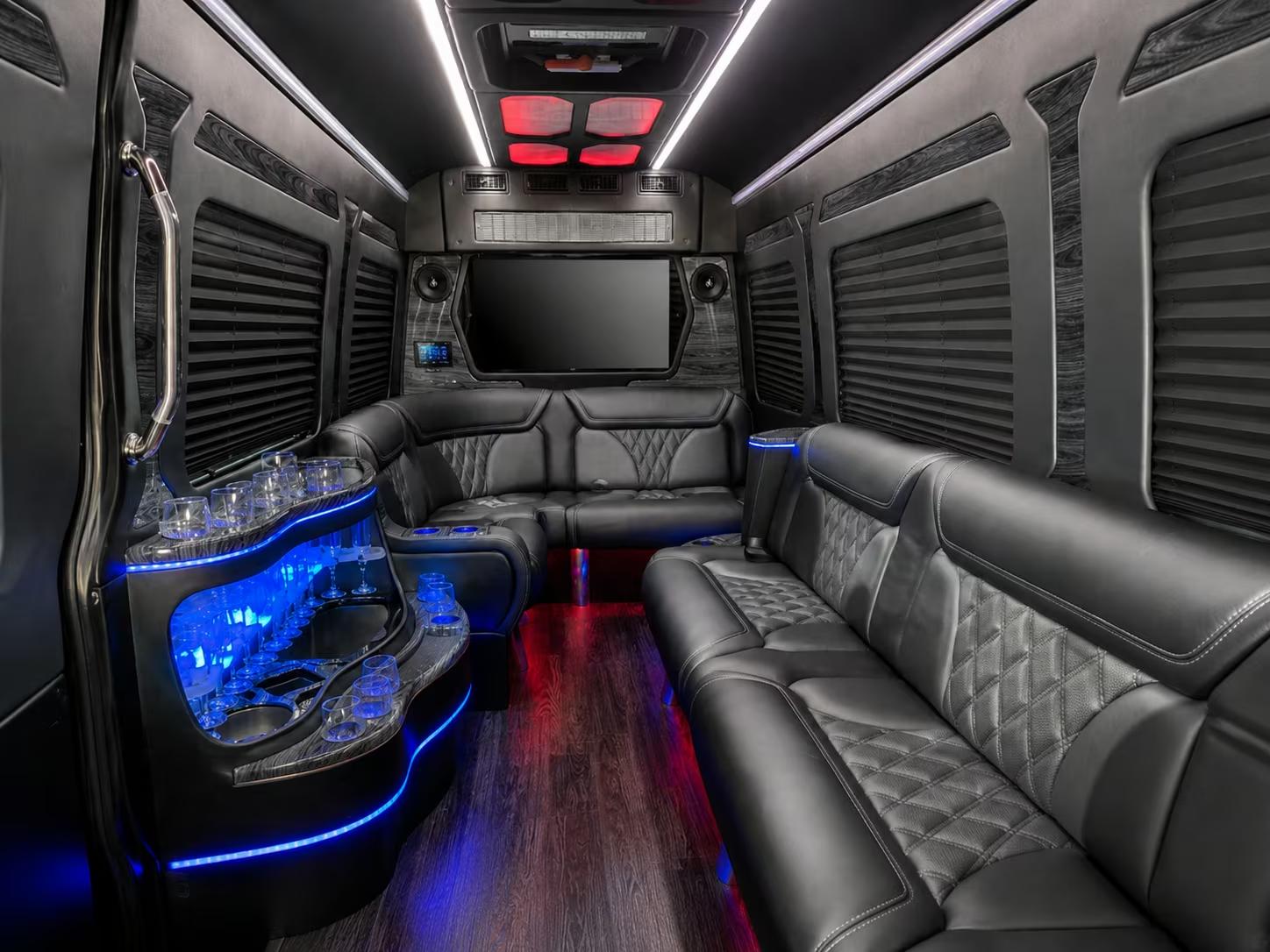
For groups of 12 or under, a Sprinter van handles the I-17 run with climate control and cargo space for a dozen rolling bags — the right fit for small executive parties or families heading to Terminal 4 for an international departure. For groups of 15 to 35, a 15–35 passenger minibus is the clean fit: powerful A/C for the descent into Phoenix heat, plush reclining seats, overhead bins for carry-ons, and undercarriage bays for checked luggage. For groups of 36 to 56, a 40–56 passenger charter bus earns its keep on the Flagstaff run specifically because of the undercarriage bays — full-depth storage that holds luggage for a 50-person travel group without anyone's bag riding in a seat.
Onboard restrooms, WiFi, power outlets, and reclining seats mean the 3-hour I-17 run is not a cramped transit experience. A group of 50 on a single charter bus is also a single departure time, one terminal drop-off, and one coordinator call at PHX instead of a 10-car caravan with 10 different parking decisions.
Browse the full vehicle lineup, or call 928-707-8906 any time to match your group size and luggage load to the right vehicle.
What a Flagstaff Charter Bus Rental to PHX Costs
Mileage is the dominant factor on a 146-mile run in a way it is not on a 20-minute city hop. For a round trip Flagstaff-to-PHX and back, the per-day rate is typically more relevant than an hourly rate — the vehicle is yours for the full day. To give you an idea of the planning ranges: a minibus might run in the $1,100–$2,150 range per day, and a full-size charter bus might run in the $1,350–$2,850 range per day.
Those are planning figures, not quotes — the real number moves with your date, vehicle, and total hours, and the only way to get your specific pricing is to call 928-707-8906 or use Partybusflagstaff.com's online form. Pricing comes back in under 30 seconds.
Split across 40 passengers, a $2,000 charter bus day-rate works out to $50 per person for the entire round trip from Flagstaff. PHX's on-site economy lots run approximately $12–$19 per day and terminal garages run $30–$33 per day for self-parked vehicles — check current rates at skyharbor.com before you plan. Ten cars at $16/day in the economy lot over a 7-night trip is $1,120 in parking before the first tank of gas.
The bus's per-person math rarely loses that comparison for groups over 20. See the Flagstaff party bus prices page for a full breakdown of planning ranges by vehicle type.
Timing Your Flagstaff Departure for PHX Flights
PHX recommends arriving 2 hours before domestic departures and 3 hours before international flights — and at one of the busiest airports in the country, those windows are not conservative padding, they are necessary. Layer the I-17 drive time on top, and the Flagstaff departure math looks like this:
| Flight type and time | PHX arrival target | I-17 drive buffer (loaded charter bus) | Flagstaff departure |
|---|---|---|---|
| Domestic, 6:00 AM | 4:00 AM at PHX | 3–3.5 hours | 12:30–1:00 AM |
| Domestic, 10:00 AM | 8:00 AM at PHX | 3–3.5 hours | 4:30–5:00 AM |
| International, 2:00 PM | 11:00 AM at PHX (3 hrs early) | 3.5 hours (+ weather buffer in winter) | 7:30–8:00 AM |
| Domestic, 6:00 PM | 4:00 PM at PHX | 3 hours | 12:30–1:00 PM |
Those departure times assume clear roads. In winter — roughly November through March — add 30 to 60 minutes and confirm I-17 chain requirements the morning of departure. Holiday weekends add a different wrinkle on the return trip: I-17 northbound backs up as far as Black Canyon City on Thanksgiving Sunday, Memorial Day Sunday, and the July Fourth weekend as Phoenix-area day-trippers head home to the north.
If your group is returning from PHX on one of those dates, build the traffic buffer into your northbound departure window as well.
The Grade Sections a Charter Bus Navigates on I-17 Southbound
Southbound on I-17, the elevation starts dropping meaningfully near Munds Park (approximately 6,500 feet) as the highway leaves the ponderosa zone. By the time the road reaches the Sunset Point Rest Area, signs are already warning commercial vehicles to check brakes before the descent into the Verde Valley — a sustained 6% grade runs for several miles heading toward Camp Verde. Past Camp Verde, the grade descends again through the Black Canyon City section (mileposts 244–251 southbound), where runaway-truck ramps sit on the right shoulder.
These are not dramatic events on a modern coach on a dry road — but they are real grade sections that run slower under load and that commercial operators plan for as part of the trip. For your group, it means the 146-mile map distance should never be divided by highway speed to get a departure time. The grade math is what you build the schedule around.
Tips for Flagstaff Groups at Phoenix Sky Harbor
Confirm the terminal before you leave Flagstaff. Terminal 3 and Terminal 4 are on entirely separate road loops at PHX. Airlines do occasionally reassign terminal gates, and there is no quick fix for discovering you're at the wrong terminal end when you're in a 56-passenger bus on an airport roadway.
Your airline's app or the PHX Wikivoyage guide shows current terminal assignments by carrier.
Gather before you call. Once your group is through baggage claim and standing together at the Level 1 commercial curb, one designated coordinator calls to move the bus from the hold lot. Calling mid-baggage-claim forces a second circuit around the terminal — and PHX curb management does not hold commercial vehicles in the active lane.
The sequence is bags in hand, group assembled, then call.
Account for PHX parking costs in your group budget. On-site economy lots at PHX run approximately $12–$19 per day; terminal garages run $30–$33. For a group that would otherwise need 8 to 10 cars, the parking tab alone on a week-long trip often makes the per-person bus math look straightforward.
Current rates are at skyharbor.com.
Winter departures need a same-morning conditions check. Flagstaff weather and Phoenix weather are separated by nearly 6,000 feet and can be entirely different weather systems simultaneously. The az511.gov interactive map shows live chain requirement notices and lane closures by milepost along I-17.
A blizzard near Flagstaff that clears by 10 a.m. can still have left the early-morning window genuinely unpassable. Checking the night before and again at departure time is not overcautious — it's the standard operating procedure for any commercial run on I-17 in winter months.
The Sky Train is free, all night. If any members of your group arrive on early-morning or red-eye flights and need to reach the Rental Car Center or move between terminals on the landside, the PHX Sky Train runs every 3 to 5 minutes at no cost, 24 hours a day, seven days a week. It is the fastest landside navigation option inside the complex and connects to Valley Metro light rail at the 44th Street/Washington station for travel into downtown Phoenix.
Frequently Asked Questions
How long does the drive from Flagstaff to Phoenix Sky Harbor take for a charter bus?
The route is 146 miles via I-17 South. A passenger car in good conditions completes it in about 2 hours 30 minutes. A loaded charter bus should plan 3 to 3.5 hours, accounting for the 6–7% grade sections through Black Canyon City and the Verde Valley where commercial vehicles run at reduced speed using engine braking.
Winter conditions near Munds Park and Flagstaff can add another 30 to 60 minutes. Always check az511.gov before departure for current milepost conditions and any chain requirements.
Which terminal at PHX does a bus use for American Airlines or Southwest flights?
Terminal 4, Barry M. Goldwater Terminal. American and Southwest both operate from Terminal 4, which is also PHX's international terminal. Drop-off for departing groups uses the upper departures roadway at Terminal 4; arriving groups pick up at Level 1 in the prearranged commercial curb zone.
Confirm the terminal assignment with your airline before departure from Flagstaff.
Which terminal handles Delta, Alaska Airlines, or JetBlue at PHX?
Terminal 3, John S. McCain III Terminal. Delta, Alaska, JetBlue, Spirit, Frontier, United, and Hawaiian Airlines operate from Terminal 3. Same Level 1 pickup process applies — prearranged commercial vehicles use the designated outer-curb zone; Door 9 is the commonly referenced landmark for scheduled intercity services at Terminal 3.
Where does a charter bus stage while waiting for our group at PHX?
Commercial vehicles at PHX use a holding lot system. The 44th Street Transportation Hold Lot near 44th Street and Washington Street is the designated staging area for permitted ground transportation. The bus holds there until your group coordinator calls to confirm everyone is assembled at the Level 1 commercial curb.
Gather first, call second — that sequence is what PHX's curb management requires.
What permit does a charter bus from Flagstaff need to pick up at PHX?
Every commercial vehicle at PHX must hold a current ground transportation permit and display a valid decal on the lower passenger side corner of the windshield. A Flagstaff charter bus falls under the Prearranged/Intercity category — "intercity" covers any pickup originating beyond 35 miles of the airport. The permit requires a Ground Transportation Two-Year Revocable Permit Application, a valid decal, and the commercial ID credential PHX requires, all issued by its Ground Transportation Office.
Official details are at skyharbor.com.
Can a charter bus drop off at the departures level for an outbound flight?
Yes. For a Flagstaff group departing on a flight, the bus uses the upper departures roadway at whichever terminal the airline operates. The bus pulls to the curb near the check-in area for bag unloading — no parking structure entry needed.
Departure drop-off is the more controllable half of the PHX trip because the timing runs from Flagstaff, not from a flight arrival window.
How far in advance should we book a Flagstaff charter bus to PHX?
For most dates, two to four weeks of lead time gives you good vehicle selection. For peak Flagstaff travel windows — Thanksgiving week, Christmas and New Year's, spring break in March, and summer holiday weekends — vehicle supply gets thin quickly. Book six to eight weeks out for peak periods.
Early-morning and late-night departure runs are especially high-demand among Flagstaff groups because no other transportation option reliably covers a 2:00 a.m. departure for a 6:00 a.m. PHX flight. Call 928-707-8906 or use Partybusflagstaff.com's online form to check availability for your date — pricing comes back in about a minute, no obligation.
Does the bus handle the return pickup at PHX after our inbound flight?
Yes. Return pickups follow the same Level 1 staging process: everyone assembles with bags at the terminal's designated prearranged curb zone, one coordinator calls to release the bus, and it arrives from the hold lot. The northbound return on I-17 climbs the same 5,800 feet back to Flagstaff, and a loaded charter bus navigating the ascending grade through Black Canyon City takes roughly 3 to 3.5 hours.
Plan the northbound return window the same way you planned the southbound departure — map estimates are a floor, not a schedule.
Is there a cheaper scheduled shuttle option for small Flagstaff groups?
Yes. Groome Transportation runs 13 daily round trips between Flagstaff and PHX, with stops at NAU and Camp Verde, starting at roughly $65 per person one-way. See Groome's Phoenix Airport page for the current Flagstaff schedule.
For 1 or 2 people, the shuttle is often the right answer. The charter bus math starts winning at groups of 10 or more, where the per-person rate on a private vehicle undercuts the per-seat shuttle cost and gives the group a single departure time and direct terminal drop-off instead of a set schedule.
Book Your Flagstaff Party Bus or Charter Bus Rental to PHX Today
The I-17 run to Phoenix Sky Harbor is one of the most demanding regional drives in the Southwest for group travel — 146 miles, nearly 6,000 feet of elevation change, commercial-grade descents through Black Canyon City, and a departure timing window that leaves zero room for a caravan car to fall behind in grade traffic. One bus from Flagstaff solves it end-to-end: every person leaves together, the grades are built into the schedule, and the terminal drop-off at PHX is a coordinated curb pull. Partybusflagstaff.com makes it easy to compare vehicles for the Flagstaff-to-PHX run — Sprinter vans for small travel parties, minibuses for mid-size groups, and full 56-passenger charter buses for large group departures — with online pricing in under 30 seconds, any time of day or night.
Also planning a smaller regional trip out of Flagstaff Pulliam Airport? The FLG shuttle guide covers the Pulliam Airport logistics for groups flying regional routes. For group transportation north to the South Rim, see the Grand Canyon charter bus guide.
Call 928-707-8906 or fill out Partybusflagstaff.com's online quote form for your date, group size, and terminal — no account needed, no obligation, and your estimate comes back in about a minute.