The problem isn't the 80-mile drive from Flagstaff to Grand Canyon South Rim — US-180 northwest through Coconino National Forest to Valle, then AZ-64 north to the entrance station, about 90 minutes on a clear morning. The problem is what happens when your group of 25 or 35 or 50 arrives in separate cars at 10 a.m. on a summer Saturday, when the South Rim Visitor Center lots are already filling, the entrance-station line is an hour deep, and everybody is trying to figure out where they parked relative to where the shuttle stops. The canyon doesn't move.
The logistics do, and they move against you.
A Grand Canyon charter bus rental from Flagstaff converts that coordination problem into a solved one. One vehicle, one entrance-station transaction, one staging area — and the park's free shuttle network takes the group everywhere from there. This guide covers exactly what group planners need to know: where the bus drops and waits at the South Rim, the NPS commercial tour entrance fee structure (it surprises first-timers at the gate), the CUA rules that apply to operators, the shuttle routes your group connects to once you're inside, and the specific parking restrictions the park's own published conditions impose on large vehicles.
All of it sourced from official NPS pages — not a brochure. For the full picture on Flagstaff group transportation, see the Flagstaff group transportation services page.
Why Rent a Charter Bus or Party Bus to Grand Canyon National Park from Flagstaff?
Grand Canyon South Rim drew 4.9 million visitors in 2024 — the third-most visited national park in the country — and the South Rim accounts for roughly 90% of that number. During the summer peak (June–August) and spring break (first two weeks of April), Visitor Center parking lots fill before 10 a.m. Entrance-station lines can hit two-hour waits between 9:30 a.m. and 4 p.m.
A group arriving in six separate cars faces six parking transactions, six entrance lines (if they stagger), and a genuine risk of splitting up at the most chaotic moment of the trip — before anyone's even seen the canyon.
A Flagstaff charter bus or party bus solves the math cleanly. One vehicle moves the whole group through the entrance station as a single transaction — paying the flat commercial rate rather than per car — and Lot 1 at the Visitor Center accommodates pull-through oversized vehicles steps from Mather Point and the shuttle terminal. From there, the park's five free shuttle routes reach every major overlook, trailhead, and lodge on the South Rim.
Nobody drives again until the return to Flagstaff. The road home — the same AZ-64 that's gridlocked with outbound traffic after 4 p.m. — is somebody else's problem on a bus.
Charter Bus & Party Bus Drop-Off at Grand Canyon National Park South Rim
The South Rim's large-vehicle logistics are governed by the National Park Service's published conditions for commercial operators — and they're more specific than most group planners expect. Per the park's official CUA conditions page, vehicles over 22 feet are prohibited from Parking Lot A, Rowe Well Road, and Canyon Rim Road/Grandview Access Road. That rules out a lot of the rim-adjacent lots for full-size charter buses.
The correct zones are the Visitor Center lots and the Village staging areas.
For the Village specifically, the park's published conditions establish these rules for commercial vehicles:
- Bright Angel Lodge: Maximum 15-minute load/unload window only. Parking prohibited — the bus clears after dropping the group and stages elsewhere.
- Maswik Lodge (eastern side): Three designated commercial bus spots on the eastern side of the building — the primary waiting area for buses while groups are inside the park.
- Desert View (East Entrance area): Buses must use the commercial/oversized vehicle area at Desert View — the relevant staging zone for groups entering via the AZ-89/Cameron approach rather than the South Entrance.
At the Visitor Center itself, the shuttle bus terminal sits on the southeast side of the Grand Canyon Visitor Center Plaza in a covered, open-air terrace with shade structures and benches — that's where your group connects to the free shuttle network after stepping off. Lot 1 at the Visitor Center provides pull-through spaces for large vehicles with the closest access to Mather Point; Lots 2, 3, and 4 are standard vehicles only, no pull-throughs, no oversized.
Vehicles over 22 feet are prohibited from Parking Lot A and several rim-access roads. General GPS routing will send a bus toward the rim lots that are explicitly off-limits for large commercial vehicles. Get the approach confirmed before departure — not at a closed gate.
Review the official Grand Canyon South Rim parking page before your trip for current lot conditions and any seasonal access changes.
NPS Commercial Tour Entrance Fees and CUA Requirements for Grand Canyon Bus Groups
This is the section most group planners skip — and then encounter at the entrance station. Commercial tour operators pay a separate NPS fee structure from regular park visitors, and it applies on every entry. Per the park's official commercial tour entrance fees page:
- Vehicles with 1–25 passenger capacity: $8.00 per person (passengers 15 and under exempt)
- Vehicles with 26+ passenger capacity: $300.00 flat fee, regardless of headcount
The park accepts credit or debit cards only at the entrance station. No cash. No NPS annual pass.
No America the Beautiful pass. For commercial tours, no pass of any kind is accepted — the fee applies fresh on every entry. Run the per-head math on a 56-seat coach: $300 flat fee across 56 passengers works out to roughly $5.36 per person.
The standard private vehicle rate of $35 per car, for the same 56 people spread across eight cars, totals $280 minimum — and that's before parking passes or additional coordination costs. The flat commercial rate is one reason large groups lean toward a single charter bus.
The other non-negotiable: a valid Commercial Use Authorization (CUA). Every commercial operator must show their CUA hard copy at the entrance station on every visit. The park has clarified one important distinction — motorcoach companies providing chartered transportation only (not guided, interpretive tours) are not required to hold the Road-Based Commercial Tour CUA.
That requirement falls on the tour organizer or activity provider. If your group is booking private group transportation rather than a packaged guided tour, this distinction applies. Confirm the authorization status when requesting estimates, and check the Grand Canyon CUA page for current requirements — the 2026 application period is closed; new applications open October 1, 2026 for the 2027 season.
The $300 flat commercial entrance fee for 26+ passenger vehicles is paid at the gate, in addition to the bus rental cost. It's a separate line item — credit or debit only, no passes. Build it into your per-head budget before you compare quotes.
Grand Canyon's Free Shuttle System: What Your Group Can Reach After Drop-Off
One bus gets the group to the rim. Five free shuttle routes get them everywhere else — and this is actually what makes the South Rim work so well for large groups arriving by charter bus. Your group doesn't need to drive to Hermit's Rest, the South Kaibab Trailhead, or any of the major overlooks.
The shuttle covers all of it, included with the park entrance fee.
Per the park's official shuttle bus route page, five routes operate during summer 2026 (May 23–September 11):
- Village (Blue) Route: Connects the Visitor Center to all lodges, campgrounds, and Market Plaza. Runs 6:30 a.m.–9:30 p.m., every 10–15 minutes. This is the first route your group boards from the Visitor Center drop-off.
- Kaibab Rim (Orange) Route: Operates 5 a.m. to one hour after sunset. Serves South Kaibab Trailhead, Yaki Point, Pipe Creek Overlook, Mather Point, and Yavapai Geology Museum — the best circuit for canyon panoramas and geological interpretation stops.
- Hermits Rest (Red) Route: The 7-mile Hermit Road run, with stops at nine overlooks including Hopi Point (270° panorama, one of the widest views on the South Rim), Mohave Point, and Pima Point. Operates 8 a.m. to one hour after sunset; 80-minute round trip. Between March 1 and November 30, Hermit Road is closed to all private vehicles — the only access is by free shuttle, on foot, by bicycle, or via commercial tour.
- Tusayan (Purple) Route: Summer-only service to the gateway town of Tusayan, every 45 minutes from 8 a.m. to 9 p.m.
- Hikers' Express: Early-morning departures at 4 a.m., 5 a.m., and 6 a.m. from Bright Angel Lodge to the South Kaibab Trailhead — the route for groups with early hiking plans.
The logistical flow for a bus group: the charter bus drops the group at the Visitor Center, they walk to the shuttle terminal, board the Blue Route to whichever lodge or trailhead they want to start from, and the Red and Orange routes branch from there. Spring and summer shuttle waits can run 45 minutes between buses during peak midday hours — another reason a charter bus arrival before 9 a.m. pays off. Beat the crowd in, and the shuttles are running at full frequency before the Visitor Center lots fill.
What Size Bus Does Your Grand Canyon Group Need?
A Grand Canyon day trip from Flagstaff is 80 miles each way — roughly 3 hours of total driving on a standard out-and-back — plus a full canyon day. The right vehicle depends on your headcount, how much gear you're hauling (water, day packs, hiking poles, camera bags for a full day in the canyon), and whether you need an onboard restroom for the AZ-64 stretch. Partybusflagstaff.com connects you to a large network of bus companies serving Flagstaff, so you can compare options against your actual headcount and date. Here's how the vehicle lineup breaks down for a South Rim run.
| Vehicle | Capacity | Gear/Storage | Best for | Key amenities |
|---|---|---|---|---|
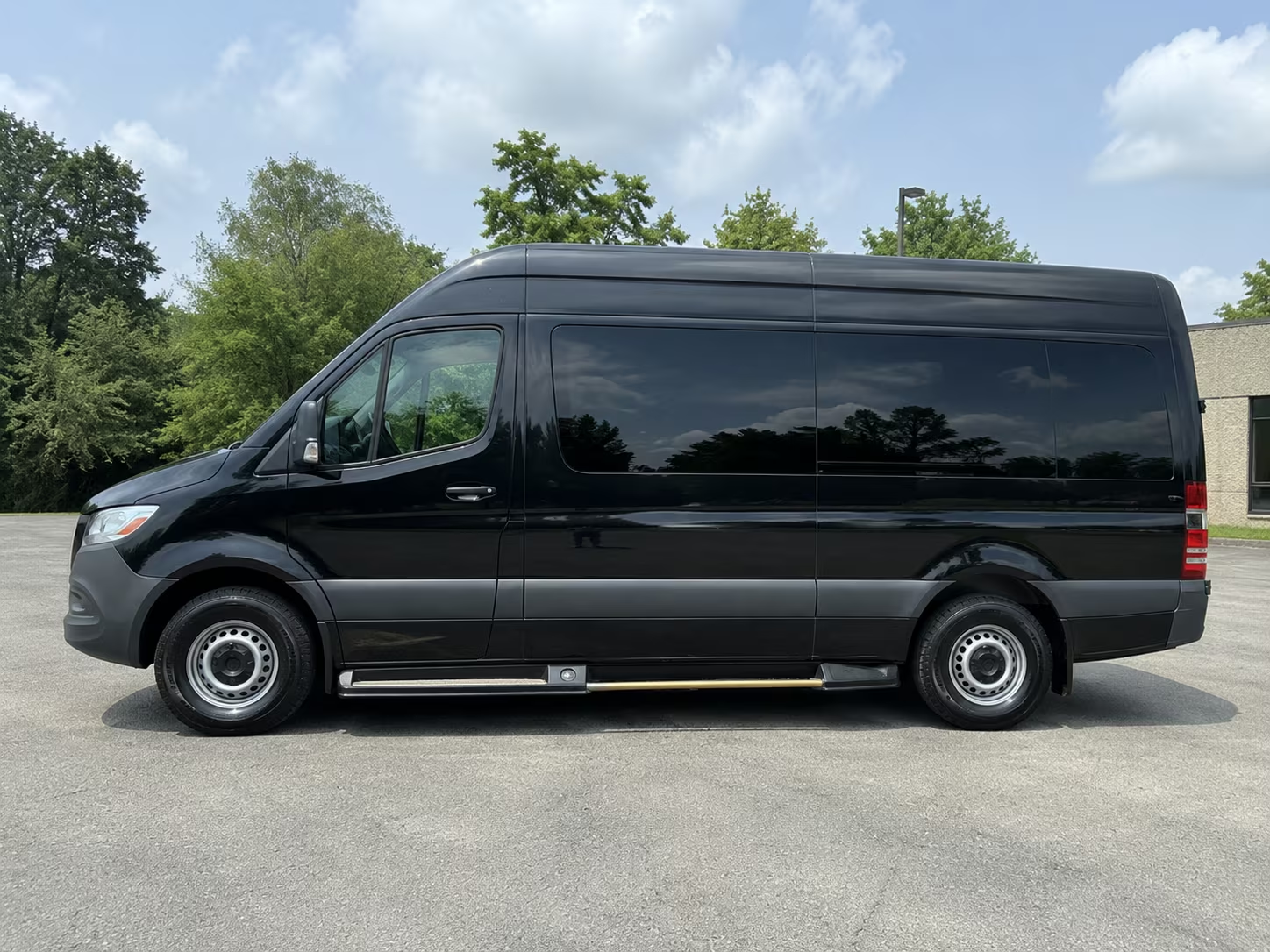
| Sprinter Van / 14-passenger Sprinter limo | Up to 14 | Modest — day packs, water bottles, camera bags | Small family groups, executive day trips, private parties | Premium leather, USB charging, tinted privacy windows |
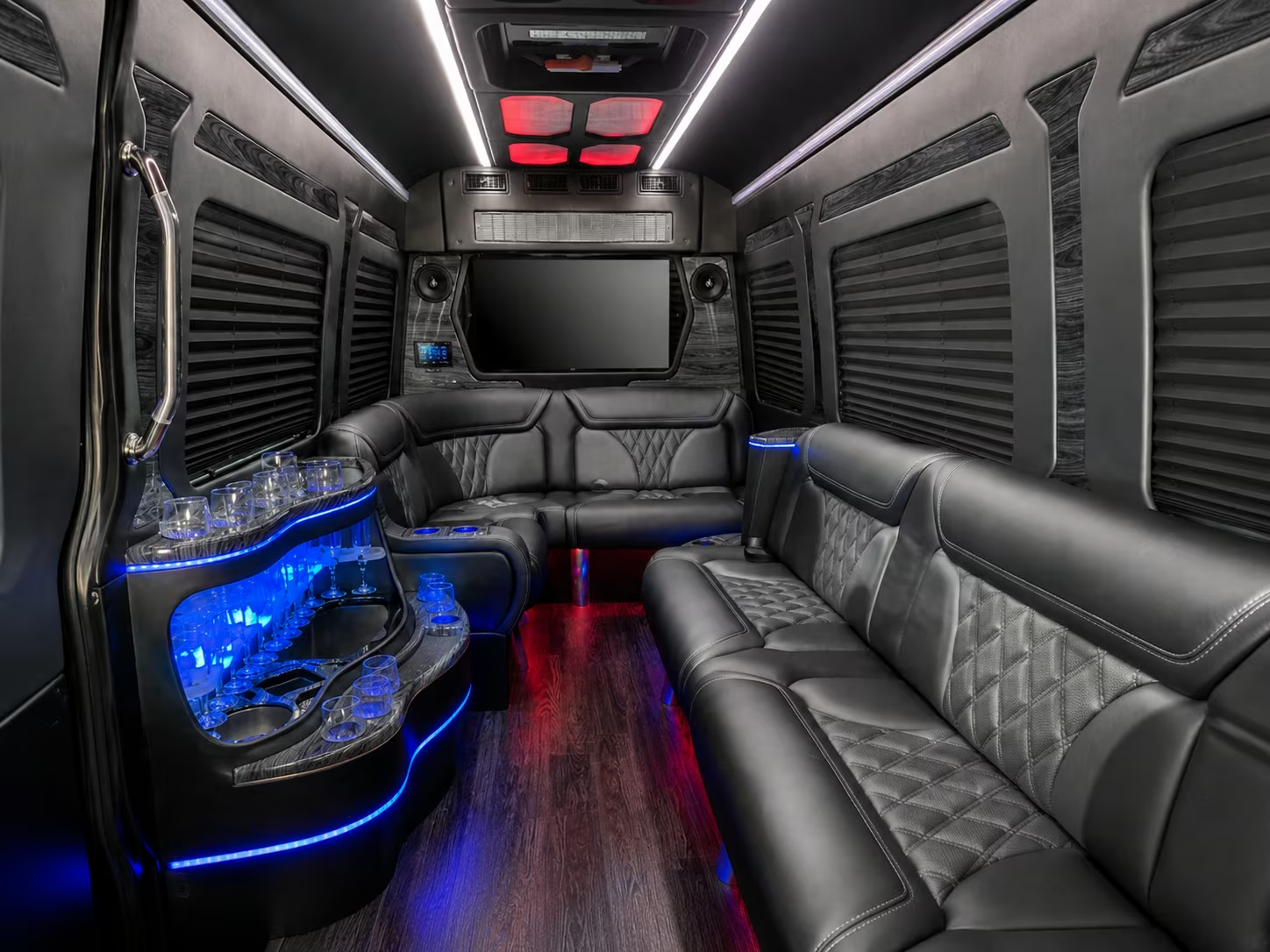
| 15–35 passenger minibus | 15–35 | Overhead bins plus underfloor on most models | School groups, club outings, mid-size corporate trips | Powerful A/C, plush reclining seats, overhead storage — better Village maneuverability than a full-size coach |
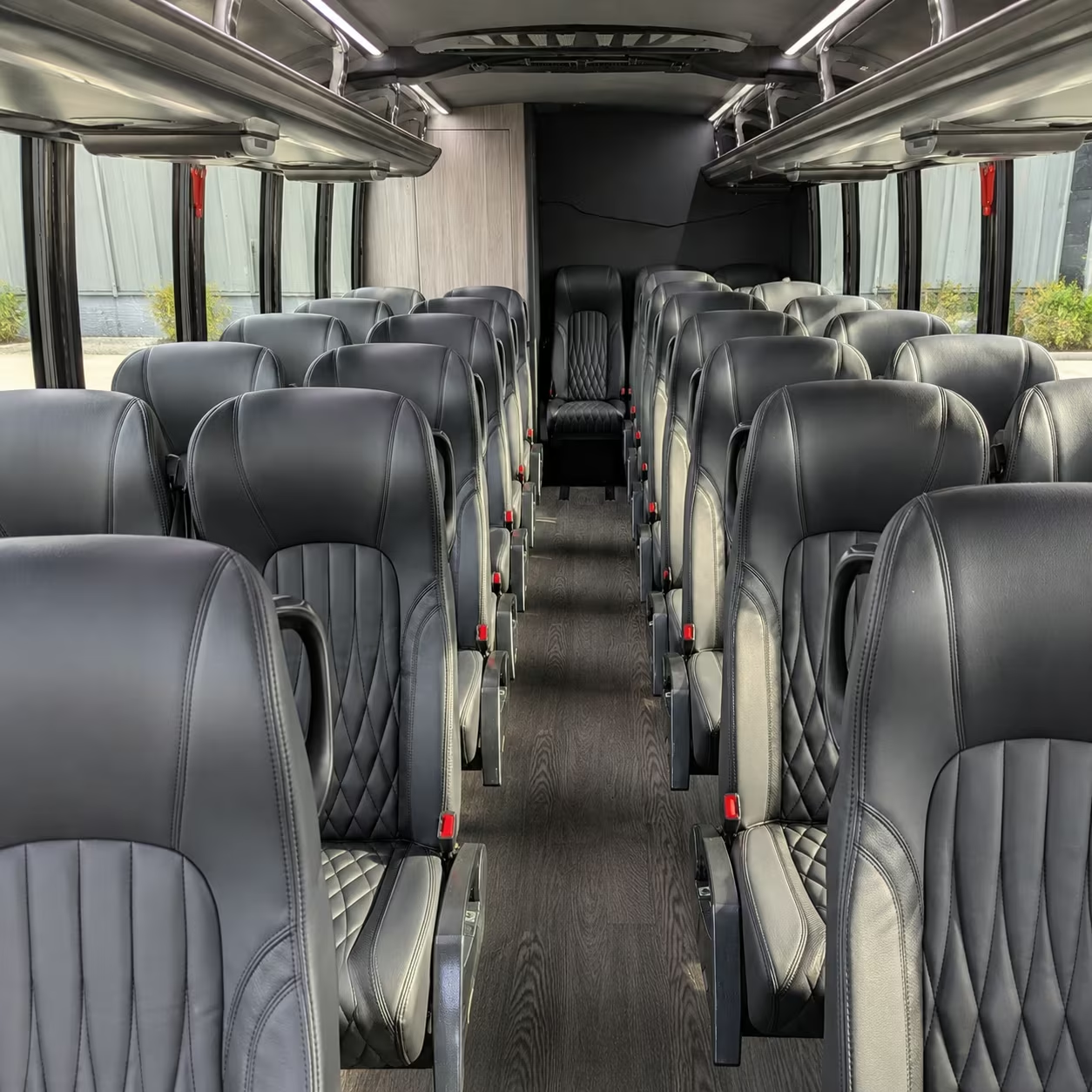
| 40–56 passenger charter bus | Up to 56 | Excellent — deep undercarriage bays hold full-day gear | Large groups, school field trips, corporate outings | Reclining seats, climate control, overhead storage, WiFi, power outlets, onboard restroom, undercarriage bays |
For most Grand Canyon charter bus rentals from Flagstaff, the two specs that matter most are A/C and storage. A full day on the rim in Arizona summer heat means serious water and gear per person — a 56-seat charter bus handles all of it in the undercarriage bays, and the onboard restroom eliminates any roadside stop on AZ-64 both ways. A minibus is the smarter fit for school groups and smaller outings — more Village maneuverability, lower per-hour cost, and it still triggers the $300 flat commercial fee if it seats 26 or more.
That fee applies to any commercial vehicle with 26+ capacity, so a 35-seat minibus and a 56-seat coach pay the same entrance rate at the gate. Worth knowing when you're comparing quotes at similar headcounts.
Grand Canyon Party Bus and Charter Bus Rental Prices from Flagstaff
Most Grand Canyon day trip rentals from Flagstaff run 8–10 hours when you account for pickup, the 90-minute drive, a full canyon afternoon, and the return. To give you a sense of planning ranges: a 40-passenger party bus on a weekend runs roughly $325–$500 per hour, putting an 8-hour trip around $2,600–$4,000 — split across 40 people, that's approximately $65–$100 per head, transportation handled door to door. A 56-seat charter bus on a weekday might run $200–$350 per hour, with a full day around $1,600–$2,800 — roughly $29–$50 per person at capacity.
Those are example pricing ranges to help with early planning — not a quote or a guarantee. The real number for your group size, date, and pickup location in Flagstaff comes from the quote form or a call to 928-707-8906. Partybusflagstaff.com pulls from a large network of bus companies serving Flagstaff and returns online pricing in under 30 seconds. See the Flagstaff party bus prices page for more planning ranges by vehicle type.
One separate line item to budget for: the $300 NPS commercial entrance fee for any 26+ seat vehicle. It's paid at the entrance station, on a credit or debit card, by the operator — separate from the rental cost. On a 56-seat coach, that's another ~$5.36 per person.
On a per-head basis, still well below the cost of eight cars each paying $35 at the gate, before parking.
The Flagstaff to Grand Canyon Drive: Routes, Times, and the Entrance Station Variable
The park's own official directions page confirms three viable routes from Flagstaff to the South Rim — all roughly equivalent in distance, with the real variable being the entrance-station wait at the gate you choose.
| Route from Flagstaff | Distance | Drive time (off-peak) | Entrance used | Notes |
|---|---|---|---|---|
| US-180 NW → AZ-64 North | ~80 miles | ~90 minutes | South Entrance Station | Most scenic; passes through Coconino National Forest; primary approach for most Flagstaff groups |
| US-89 North → AZ-64 West (via Cameron) | ~82 miles | ~95–100 minutes | Desert View (East) Entrance | Enters at Desert View Watchtower; 23-mile Desert View Drive toward Village; often shorter gate lines in peak season |
| I-40 West → Williams → AZ-64 North | ~89 miles | ~95–100 minutes | South Entrance Station | Longer route; useful if the group is picking up from the I-40 corridor |
The US-180 approach is the standard for most Flagstaff-to-canyon runs — prettier, more direct, and the most familiar routing for northern Arizona groups. But during summer peak hours, the South Entrance Station can back up to a two-hour line between 9:30 a.m. and 4 p.m. A charter bus arriving via the Desert View East Entrance — entering the park at the Watchtower end and working westward along Desert View Drive before reaching the Village — often clears the gate faster on peak days.
The 23-mile Desert View Drive has six developed viewpoints and the canyon's only gas station, which gives a group arriving that way a built-in scenic circuit before reaching the shuttle terminal.
Peak Season, Crowds, and When to Book Your Grand Canyon Charter Bus Rental
The South Rim is open year-round, and it's always busy — but summer and spring break are when the logistics get genuinely painful for groups without a bus. Lot 1 and the Visitor Center lots fill before 10 a.m. on summer Saturdays. Shuttle stops back up to 45-minute waits during peak midday.
Entrance-station lines hit two hours. A group arriving in separate cars at 10:30 a.m. on a July weekend finds limited parking, scattered across different lots, with a 30-minute shuttle wait ahead of them before anyone sees the canyon.
One charter bus converts all of that into a single arrival. The entrance-station line is one transaction. The parking is one pull-through in Lot 1.
The shuttle wait is the only thing the bus can't eliminate — and an early departure from Flagstaff solves even that.
On booking windows: for summer dates (June–August) and spring break (first two weeks of April), book your Grand Canyon charter bus or party bus rental from Flagstaff at least two to three months ahead. Northern Arizona vehicle supply is competitive in summer — the right-size vehicles go first. For shoulder season — late September through early November and mid-March — two to four weeks of lead time is typically workable, and those months give you the best canyon experience: thinner crowds, shorter entrance lines, and 55–75°F rim temperatures instead of July's heat.
Arrive before 9 a.m. or after 4 p.m. on peak days — that's the park's own advisory, not a tip from a travel blog. A charter bus picking up from Flagstaff at 6:30 a.m. lands at the South Rim before 8:30 a.m., before the lots fill and before the entrance line forms. That single timing decision changes the whole day.
Tips for Every Group Visiting Grand Canyon National Park
- Cards only at the entrance station. No cash at any Grand Canyon entrance station — for private vehicles or commercial operators. The $300 commercial fee your bus pays at the gate requires a credit or debit card. No exceptions.
- Hermit Road is shuttle-only March through November. Between March 1 and November 30, all nine Hermit Road overlooks — Hopi Point, Mohave Point, Pima Point, and six others — are accessible by the free Red Route shuttle only, or on foot, by bike, or via commercial tour. No private vehicles, no charter buses allowed on Hermit Road during that window. Plan your group's Hermit Road time around the shuttle schedule, not a map pin.
- Bus engines off when staged. The park's CUA conditions require commercial vehicle engines to be off while parked — except during active passenger loading and unloading. The Maswik staging spots and Lot 1 pull-throughs are quiet waits, not idling zones.
- The North Rim is a different park in 2026. The Dragon Bravo Fire destroyed the historic Grand Canyon Lodge and key infrastructure on the North Rim in 2025, and the North Rim had extended closures as a result. Confirm North Rim status with the park before booking any itinerary that includes it. The South Rim is unaffected and fully operational.
- Check road conditions before winter departures. The South Rim never closes, but US-180 through Coconino National Forest carries meaningful winter weather. Check the Arizona DOT conditions line before any cold-month departure from Flagstaff — the road itself is fine 90% of the time, but a group bus in December or January deserves a confirmed forecast.
- Review the official parking page the week of your trip. Seasonal lot closures and shuttle schedule changes happen. The Grand Canyon South Rim parking page and the shuttle schedule are both actively maintained — check them close to your trip date, not six weeks out.
Frequently Asked Questions
Where does a charter bus drop off at Grand Canyon South Rim?
The main drop-off zone for large commercial vehicles is the Visitor Center Plaza area, where Lot 1 provides pull-through spaces for oversized vehicles and the shuttle terminal sits on the southeast side of the plaza, steps from Mather Point. In the Village area, buses have a 15-minute load/unload window at Bright Angel Lodge (parking prohibited there), and three designated commercial bus spots on the eastern side of Maswik Lodge for staging while groups are inside. Vehicles over 22 feet are prohibited from Parking Lot A and several rim-access roads — confirm the exact approach for your vehicle size before departure.
How much is the NPS entrance fee for a charter bus or party bus?
Commercial vehicles with 26 or more passenger capacity pay a $300 flat fee at the entrance station. Vehicles with 1–25 passenger capacity pay $8 per person (passengers 15 and under exempt). No park passes apply to commercial tours.
Credit or debit card only — no cash, no exceptions. The $300 fee is separate from the bus rental cost and is paid at the gate on the day of the trip.
Does the charter bus operator need a CUA to enter Grand Canyon?
For road-based commercial tours — guided interpretive tours with 16+ passenger vehicles — a valid CUA is required and must be shown at the entrance station on every visit. The NPS has clarified that motorcoach companies providing chartered transportation only (no guiding) are not required to hold the Road-Based Commercial Tour CUA — that requirement falls on the tour organizer or activity provider. If your group is booking private group transportation rather than a packaged guided tour, confirm the authorization status when you request estimates.
See the Grand Canyon CUA page for current requirements.
How long is the drive from Flagstaff to Grand Canyon South Rim?
About 80 miles and 90 minutes via US-180 northwest to Valle, then AZ-64 north to the South Entrance — the most direct route. Add 30–45 minutes for summer entrance-station waits if arriving between 9:30 a.m. and 4 p.m. The alternative route via US-89 north to Cameron, then AZ-64 west to the Desert View East Entrance, covers similar distance and often clears the entrance station faster on peak days.
Is Hermit Road accessible by charter bus?
Not directly. Hermit Road is closed to all private vehicles between March 1 and November 30. During that nine-month window, access is by the free Red Route shuttle, on foot, by bike, or via commercial tour only.
The shuttle hits all nine overlooks inbound and four on the return, with Hopi Point, Mohave Point, and Pima Point as the primary stops. During December, January, and February, private vehicles under 22 feet can drive Hermit Road — no shuttle service operates in winter on that route.
Can the bus wait at Grand Canyon while the group is inside?
Yes. The three designated commercial bus spots on the eastern side of Maswik Lodge are the main staging area for buses waiting while groups are exploring the park. Lot 1 at the Visitor Center also accommodates large pull-through vehicles.
Per the park's CUA conditions, engines must be off while staged — buses run only during active loading and unloading, not while parked and waiting.
How far in advance should I book a charter bus to Grand Canyon from Flagstaff?
For summer weekend dates (June–August) and spring break (first two weeks of April), book at least two to three months ahead. Northern Arizona vehicle supply is competitive on peak summer weekends, and the right-size vehicles fill first. For shoulder-season trips (late September–November, mid-March), two to four weeks of lead time typically works — but the earlier you compare options through Partybusflagstaff.com, the more you'll have to choose from.
What's the best time of year for a group charter bus trip to Grand Canyon?
Late September through early November and mid-March through May consistently offer the best combination: manageable crowds, shorter entrance-station lines, and 55–75°F rim temperatures for comfortable walking and hiking. Summer trips are entirely workable on a bus — an early departure gets you ahead of the worst congestion — but the crowds are real at 4.9 million annual visitors, and the South Rim heat in July and August is significant. Winter visits (December–February) mean the thinnest crowds and snow-dusted rim views, with the caveat that US-180 can carry winter weather and the Hermit Road shuttle doesn't run.
Does a party bus or minibus pay the same commercial fee as a full-size charter bus?
Yes, if the vehicle has 26 or more passenger capacity. The $300 flat commercial entrance fee applies to any commercial vehicle with 26+ seats, regardless of whether it's a minibus or a 56-seat coach. Vehicles with 1–25 capacity pay $8 per person instead.
That means a 35-seat minibus and a 56-seat charter bus pay identical commercial fees at the gate — a useful fact when you're comparing vehicle options at similar headcounts and the per-head math looks close.
Book Your Flagstaff to Grand Canyon Charter Bus or Party Bus Today
Getting 20, 30, or 50 people to one of the country's great natural landmarks doesn't have to mean a caravan of cars, a fractured entrance-station line, and a parking scramble at 10 a.m. Partybusflagstaff.com makes it easy to compare charter bus, party bus, and minibus quotes from a large network of bus companies serving Flagstaff — one quick form, online pricing in under 30 seconds, no account required. The shuttle system handles everything inside the park. Your bus handles Flagstaff to the South Rim and back.
Call 928-707-8906 any time to get a quote for your Grand Canyon group trip, or use the online tool to see available options. Also planning a stop at Arizona Snowbowl or catching a show at Pepsi Amphitheater? Those guides cover their own drop-offs for groups building out a full northern Arizona itinerary.